
James Hamilton
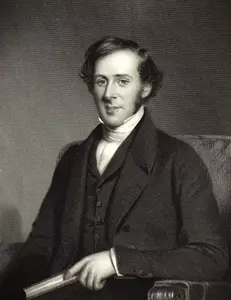

James Hamilton
A man greatly beloved
On Sunday morning, December 1st, 1867, at the Metropolitan Tabernacle, London, C.H. Spurgeon preached a sermon entitled, Sermons from Saintly Death-beds. His theme was prompted, in large part, by the death of a fellow London minister, James Hamilton. “During the past week, as most of you know, God has seen fit to remove from the midst of the church a great man, and a prince in Israel, a man greatly beloved, one of the excellent of the earth, an amiable, zealous, talented, godly, and valiant man…Dr. James Hamilton was one of the most fragrant flowers in the Lord’s garden of sweet flowers to which the Beloved so often comes to gather lilies. He was not a Boanerges – not after the quality of a Knox and Luther, but a Barnabas, a son of consolation, a man full of faith and of the Holy Ghost”.
Another London minister, John Thain Davidson, to whom we were introduced in a previous post, put it like this: the death of James Hamilton had “deprived…the Christian church of one of the most amiable and accomplished of men: a man whose exquisite genius gilded every theme it touched with a fascinating charm; whose large, loving, and catholic spirit endeared him to the whole religious community…; whose genial spirit and consistent life, not to speak of the varied productions of his magic pen, have, more, perhaps, than those of any other man of our time, exerted a warming and softening influence upon Christian society, and whose removal leaves a blank it is impossible to fill”.
Early years
James Hamilton was born on the 27th of November 1814. His father, William Hamilton, was the parish minister of Strathblane, a small village that lies some eleven miles north of the city of Glasgow, Scotland. James’ future biographer, William Arnot, recalls the one occasion on which he saw and heard him: “I remember well both his figure and fervent manner as he preached. He gave me the impression of the Baptist preparing the way of the Lord, with none of the Baptist’s sternness. I stood in awe before him, but it was the awe inspired by the tenderness of a messenger who besought us to be reconciled to God”. He adds, “It was not the measured cadence of a cultivated orator that carried you away, it was the holy elevated earnestness of the man that made a listener’s heart burn within him”.
James inherited from his father a love of books that remained with him to the end of his days. Writing about himself on one occasion, he recollects how “it was his lot to be born in the midst of old books”, how “before he could read them they had become a kind of companions”, how night after night he would carry some “bulky folio” to bed with him, and how “he fell asleep to dream of a paradise where there was no end of books, and nothing to interrupt the reader”. In a letter of thanks to a friend who had sent him a “monster parcel” of books, he could say, “no miser can ever have gloated over gold as I revel over books, – books that go to swell my own hoard”.
What of the Lord’s work in his heart? “I think it is altogether probable”, says Arnot, “that the new life began at an age so early that it could not be definitely marked either by himself or others; and that, through the blessing of God on a pious nurture and holy example, it grew with his growth”. A serious illness during the summer before his seventeenth birthday brought a marked deepening of it. In a personal covenant, written and signed, we find him dedicating himself to the Lord and his service in the following terms: “I embrace Jesus Christ as he is offered to my acceptance in the Gospel…Every sin that has had dominion over me I renounce…To Thee and to Thy service I surrender all the faculties Thou hast bestowed upon me…Grant unto me more and more to know Thee. Strengthen in me that which is good, and root out that which is evil…Support me in the time of trial and temptation, and stand by me in the hour of death”.
From Abernyte to London Theological study under Drs. Thomas Chalmers and David Welsh was followed by a short stint as a district missionary in the poor and densely populated Rose Street area of Edinburgh. He then moved to the village of Abernyte near Dundee. A member of Andrew Bonar’s congregation in neighbouring Collace had come to Edinburgh in search of an assistant to Abernyte’s elderly parish minister. Simply hearing Hamilton lead the congregation of St. George’s church in prayer was enough to convince him that “this is the minister for Abernyte”.
His ministry there began in February 1839 and continued for just under two years. A diary entry from the September of his first year will give us a glimpse of what a favoured part of the country it was to which he had come: “On two Thursdays preached in St. Peter’s, Dundee, and saw something of the glorious work going forward there. The first time, was lamentably dull myself, not so the second time. Wonderfully eager congregation both times. Each visit greatly refreshed me”. A remarkable revival had begun the month before under the ministry of his friend William Chalmers Burns and Hamilton was one of a number of ministers who went to assist. Burns in turn, along with Andrew Bonar of Collace, Robert Macdonald of Blairgowrie, and St. Peter’s own minister, Robert Murray M’Cheyne, were frequent visitors to Abernyte. There, writes Arnot, they “contributed by their addresses at the weekly prayer-meeting to kindle and spread the flame of spiritual zeal that, to a large extent, at that time pervaded the district”.
To M’Cheyne Hamilton was especially close. Writing to Andrew Bonar after M’Cheyne’s death in March 1843 he says, “I have been trying to bring my cold, stubborn, unbelieving heart to ponder God’s message to myself. When I compare myself with him I see what sinful trifling much of my ministry has been; and when I think how beautiful was his holiness, and how impressive the consistency of his character, and think of my incurable levity and readiness to fall in with other people’s ways, I would despair were it not for the exhaustless resources of the cleansing blood and sanctifying Spirit. Oh, to follow the Lord fully like him, – to be the Christ-like man he was!”
Hamilton’s ministry in Abernyte was fruitful but brief; his second ministry, in the Roxburgh Church in Edinburgh, briefer still, lasting less than six months. On the 25th of July 1841, however, he entered on a work that would be his till the close of life. The National Scotch Church in Regent Square, London, had once been the scene of Edward Irving’s ministry and had passed through trying times. By 1841 there was still a large debt on the building and the congregation had been without a minister for two years. When a deputation of Scottish ministers visited in the spring of 1841 the elders sought their help. Was there someone whom they could recommend? Arnot writes, “The Scottish brethren intimated on the spot that they had their eye on a young minister who, if he could be induced to accept a call, would, in their judgment, more than compensate for all the disappointments that the congregation had experienced”. An invitation to James Hamilton to come and preach for two Sundays, a harmonious call, a move to London, his settlement as Regent Square’s new pastor, and twenty –six years of fragrant ministry, was the happy result.
Preaching and writing
Hamilton’s preaching was highly valued and much blessed from the very beginning. But it was a struggle for him. “His experience as recorded by himself”, says his biographer, was “that he was always in a glow of happiness at his study on Saturday, – but that this brightness almost uniformly gave way to a measure of despondency during the actual ministrations of the Sabbath”. The root cause was a physical weakness that made it made it difficult for him to project his voice – especially in a large building like Regent Square. Arnot describes him as “straining to make himself audible by standing on his tiptoes and throwing out his words in handfuls if so be they might reach the far-distant aisles”. He says himself, in one of his letters, “If I could persuade myself that I am as well adapted for speaking as writing, I would…abjure the press for the pulpit. But what with weakness, nervousness, an ungainly manner, and inability to rely on myself, I hardly think so”.
The writing for the press to which Hamilton refers was a major part of his ministry from the outset. James Halley, a close friend from student days, had said at the time that Hamilton “was peculiarly qualified, and therefore probably destined, to serve the Church with his pen”. So it proved. Tracts, expositions of Scripture, biographies, reviews of books, and contributions to Bible dictionaries flowed from his pen. For years, too, he carried a heavy burden of editorship – first of his denomination’s Presbyterian Messenger, then of a three year’s series for young people called Excelsior, then of a four volume work entitled Our Christian Classics, and finally of the Evangelical Alliance’s Evangelical Christendom. His writings carried his name and his influence far and wide. He had an immense and deeply appreciative readership, for example, in the United States. The combination, however, of his literary work, his preaching, the demands of his leadership role in the English Presbyterian Church, and an incessant stream of visitors to his home, eventually took its toll on his health.
Hamilton had never been physically robust and over the years he had had to have some lengthy periods away from work in order to recruit his strength. Then at the end of May 1867 came the break-down that brought his ministry to an end. “What comfort I have”, wrote his wife Annie, “on knowing that it has been in his Heavenly Father’s work that my beloved husband has become thus worn out, mentally and bodily; and He may yet give restoring power, and give him back to us”. It was Hamilton’s conviction from the beginning, however, that he would not recover. He did linger on for many weary months. But death came at last on November 24th 1867, just three days before his fifty-third birthday.
“According to the best judgment I am able to form”, says Arnot, “after a friendship long and intimate, I should be disposed to arrange the three instruments with which he served the Lord – his preaching, his books, and his life, – in the relations of good, better, best”. His conclusion was the fruit of careful observation. But so too of personal experience. “James Hamilton”, he says, “was one of the few good men of whom I should venture to say clearly and advisedly, that I was more sharply reproved, more deeply impressed, and more powerfully drawn to good by intimate contact with the man in private, than by any form of his public ministry”. He adds, “I know not a severer test of character than this; and I know not a greater triumph of grace than is implied in successfully passing through it”.